🌍 Environmental Destruction System
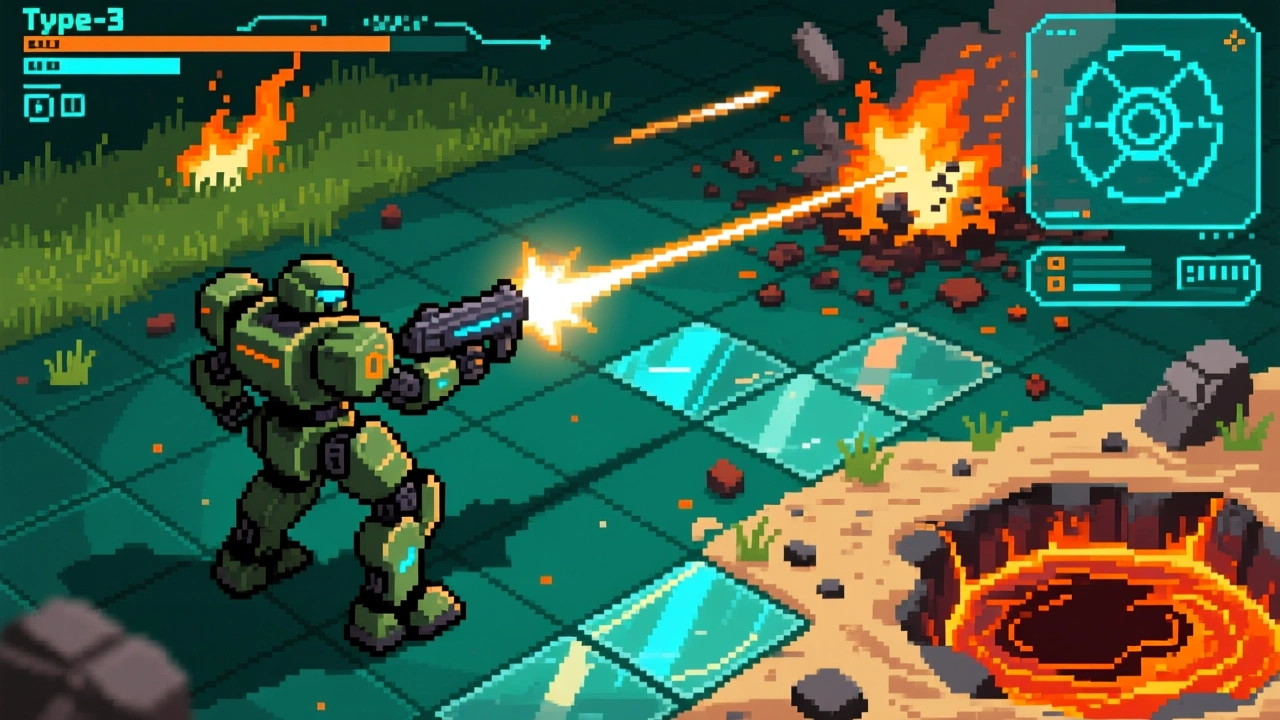
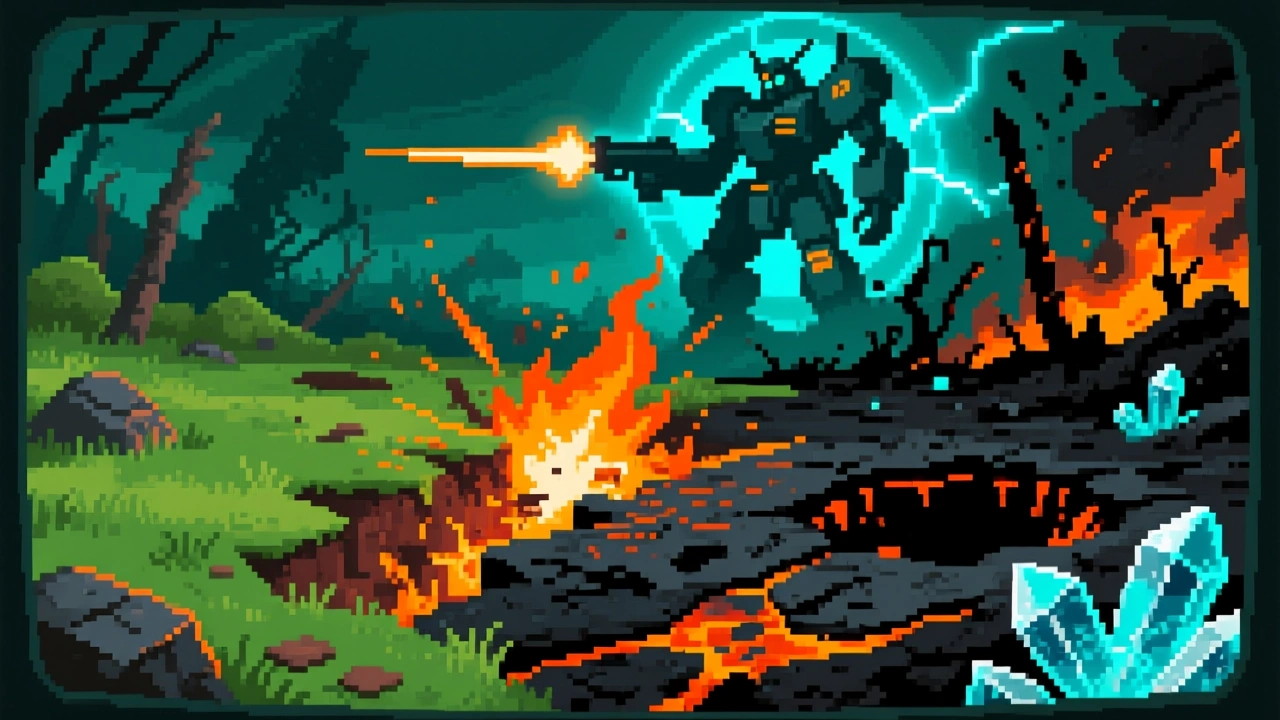
The battlefield is your canvas for destruction and transformation. Grass burns to ash, spreading fire across the terrain. Plasma weapons turn sand to glass, creating slippery surfaces that affect movement. Explosive weapons create molten lava craters that solidify into permanent obsidian scarring.
Destructible objects include fuel tanks with cross-shaped explosions, electrical transformers that arc lightning in multiple directions, and pressure tanks that launch themselves as projectiles when damaged. The environment becomes both weapon and consequence, with each battlefield telling the story of the conflict through permanent terrain changes.
🤖 Modular Mech Customization
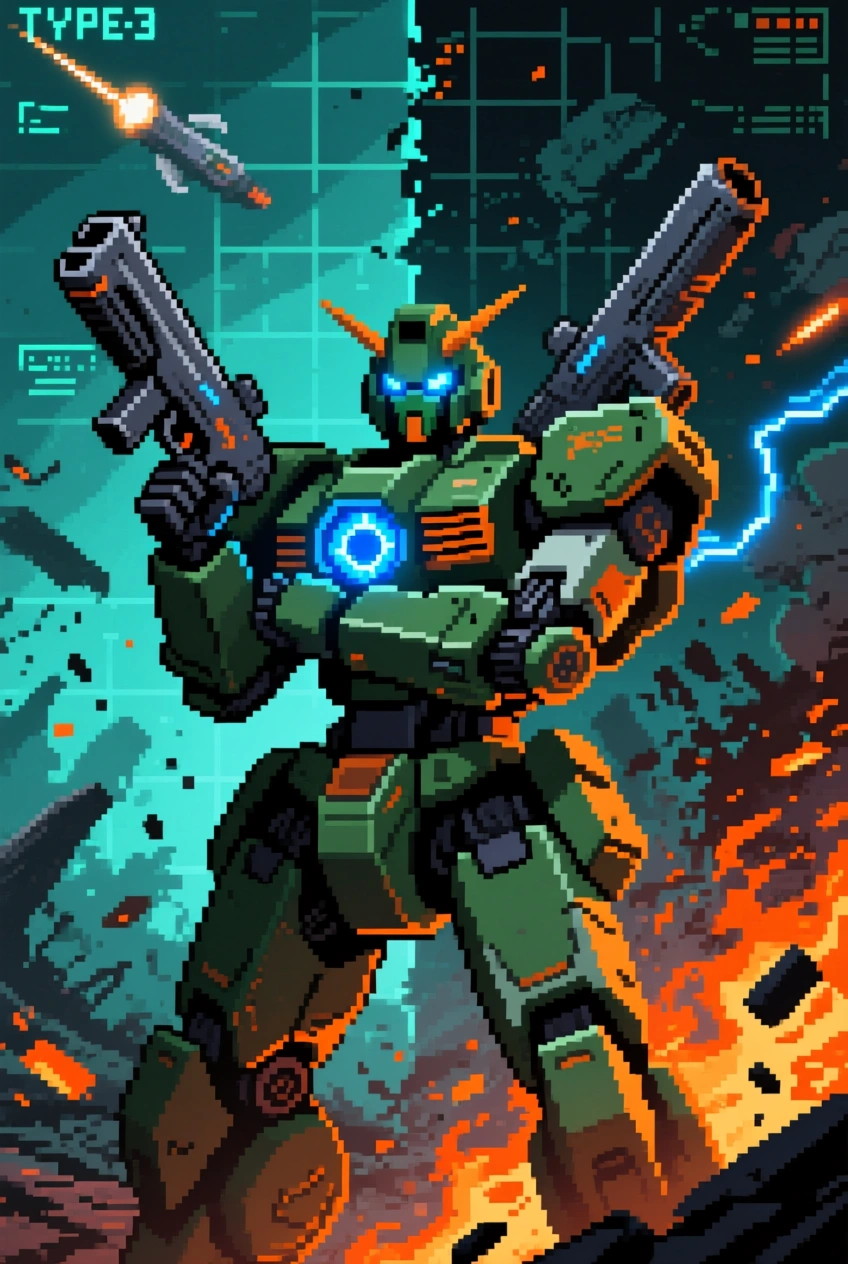
Build your Type-3 Mecha from interchangeable components: top sections (affecting weapon capacity and special abilities), bottom sections (determining mobility and terrain traversal), and internal components (managing stamina, hitpoints, and special systems).
Each configuration creates different tactical possibilities. Hover units move smoothly but suffer from recoil. Spider legs climb mountains but move slowly. Wheeled systems excel on roads but struggle in rough terrain. Component durability and fatigue systems force strategic rotation of equipment, preventing over-reliance on single optimal builds.
⚡ Real-Time Grid Combat
Experience the precision of turn-based tactics with the intensity of real-time action. The buffered input system allows complex tactical maneuvers to be queued and executed smoothly, while NPCs move with deliberate delays and clear telegraphing of their intentions.
Combat feels like "Chess at the speed of thought" - you can see what enemies will do next, plan your counters, and execute precise tactical responses. The grid system ensures that positioning, timing, and resource management remain paramount, while the real-time execution maintains engagement and flow.
🚀 Multi-Environment Combat Theaters
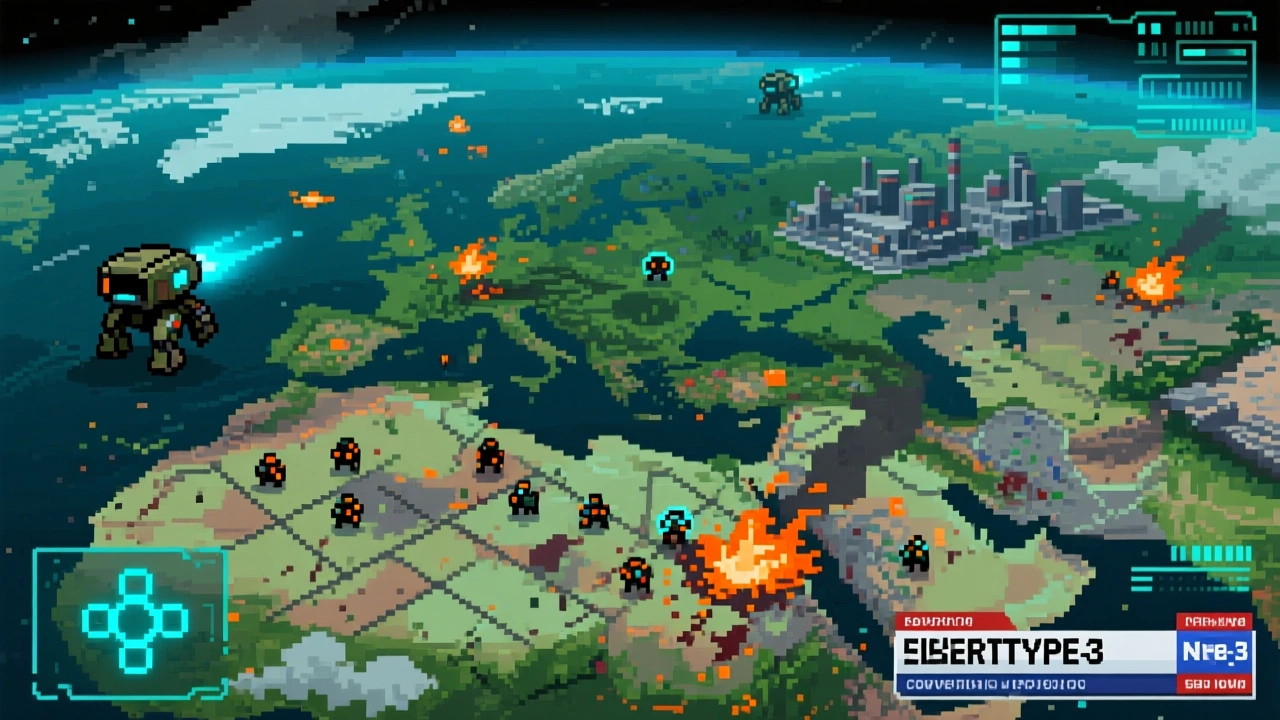
Deploy across six distinct combat environments: ground operations with full terrain interaction, air combat with momentum and altitude mechanics, space battles with drift physics, underwater missions with reduced visibility and modified movement, underground operations in confined spaces, and hyperspace encounters with compressed dimensional mechanics.
Your base mech adapts to each environment through Strike Pack systems - modular additions that modify capabilities for specific theaters while maintaining core tactical systems. Each environment presents unique tactical challenges and opportunities for creative destruction.
💥 Advanced Projectile Physics
Weapons feature complex interaction systems with 20+ parameters per weapon type. Projectiles can penetrate multiple targets, leave environmental trails (fire, plasma residue, toxic clouds), cause knockback effects, and interact with terrain in realistic ways.
The system supports everything from simple kinetic weapons to exotic energy systems. Weapons can ignite flammable gases, create temporary terrain effects, or even deploy persistent objects like laser prisms that redirect future attacks. This depth allows for emergent tactical combinations and creative problem-solving approaches.
⚖️ Moral Consequence Framework
Every action carries weight beyond immediate tactical success. The game tracks civilian casualties, environmental damage, infrastructure preservation, and tactical efficiency to generate realistic consequences and reputation changes.
Neither "heroic" nor "destructive" approaches are judged as inherently right or wrong. Instead, the system presents authentic consequences for each approach, allowing players to explore different moral frameworks while experiencing the realistic outcomes of their tactical philosophy. Some scenarios may even reward or necessitate more aggressive approaches when facing particularly hostile or uncooperative situations.